Smile Today Font: Playful Display Typography for Web Design
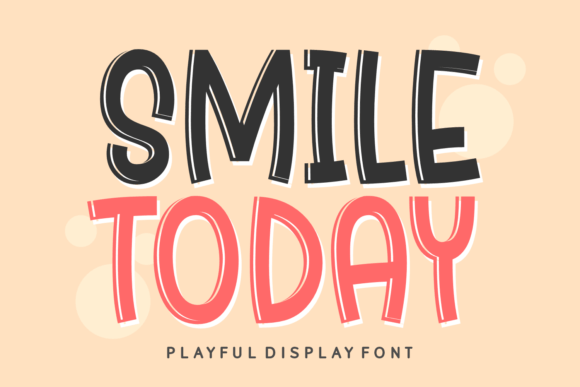
In the competitive landscape of digital design, typography often serves as the primary vehicle for brand personality. While functional sans serif fonts handle utility and readability, display typefaces carry the emotional weight of a user interface. Smile Today is a distinctive display font that bridges the gap between professional polish and approachable warmth. With its cheerful curves and playful details, this typeface dances across the page, inviting smiles and laughter while maintaining enough structural integrity to function effectively in modern web layouts. For UI designers and digital product creators, understanding how to leverage this specific aesthetic is key to building interfaces that feel human-centric and engaging.
Visual Characteristics and Digital Personality
Smile Today distinguishes itself through organic geometry. Unlike rigid geometric sans serifs or traditional high-contrast serifs, this font utilizes soft terminals and rhythmic spacing that mimic natural handwriting without sacrificing digital clarity. The letterforms possess a bounce that creates visual energy, making it an ideal candidate for brands aiming to project creativity, optimism, and accessibility. In a sea of minimalist corporate aesthetics, introducing a typeface with such distinct character helps establish immediate differentiation.
The personality of Smile Today is inherently positive, but it avoids looking juvenile when applied correctly. It strikes a balance suitable for creative portfolios, boutique e-commerce stores, coaching platforms, and lifestyle brands. The curves are deliberate rather than accidental, providing a sense of crafted quality that translates well to high-resolution screens. When users land on a site featuring this typography, the immediate subconscious association is one of friendliness and openness, which can significantly reduce bounce rates for brands relying on personal connection or creative trust.
Strategic Placement in User Interfaces
As a display font, Smile Today performs best when treated as a focal point rather than a workhorse. Its intricate details require adequate pixel density to render sharply, making it perfect for hero sections, large-format banners, and primary headlines. In landing page design, using this font for the main value proposition can soften the sales pitch, transforming a transactional message into a conversational invitation. For example, a course sales page utilizing Smile Today for section headers feels less like a lecture and more like a collaborative workshop.
- Hero Headers: Use at large sizes (48px and above) to showcase the curvature and playful ligatures without losing legibility.
- Call-to-Action Buttons: Effective for short, punchy CTAs like "Start Creating" or "Join Us," where the friendly tone encourages clicking.
- Pull Quotes and Testimonials: Adds authenticity to social proof sections by mimicking the warmth of personal communication.
- Navigation Accents: Can be used sparingly in top-level navigation for creative agencies to reinforce brand identity before the user even scrolls.
- Digital Ad Creatives: High impact in social media graphics and display ads where stopping the scroll is the primary metric.
It is crucial to avoid using Smile Today for long-form body copy, dense data tables, or complex navigation menus. The decorative nature of the glyphs increases cognitive load during extended reading sessions. Reserve this typeface for moments where you want to pause the user’s scan and deliver an emotional beat, then revert to a highly legible sans serif or serif font for informational content.
Readability and Responsive Behavior
Implementing playful typography in responsive environments requires careful technical consideration. On mobile devices, screen real estate is limited, and aggressive scaling can distort delicate curves. When deploying Smile Today, ensure your CSS includes robust fluid typography rules. Testing on various viewports is mandatory; what looks elegant on a 27-inch monitor may become illegible on a 320px wide smartphone screen if the minimum font size drops too low. A safe baseline for mobile display text using this font is typically no smaller than 24px to preserve the integrity of the internal counters and stroke width.
Contrast ratios also play a pivotal role in accessibility. Because the strokes have varying weights and organic shapes, standard WCAG contrast checkers should be verified visually. Dark backgrounds often enhance the glowing, cheerful quality of Smile Today, but light text on dark backgrounds can sometimes cause halation that blurs fine details. Conversely, on light backgrounds, ensure the color choice provides sufficient weight so the playful lines do not appear fragile. For image overlays, always use a gradient scrim or solid backdrop behind the text to guarantee consistent readability regardless of the underlying photograph.
Font Pairing for Balanced Web Layouts
Successful integration of Smile Today relies heavily on effective font pairing. To maintain a professional digital identity, pair this display font with a neutral, structured counterpart. A clean geometric sans serif like Inter, DM Sans, or Outfit provides the necessary stability to ground the exuberance of Smile Today. This combination allows the display font to shine in headers while ensuring body copy remains scannable and accessible. The contrast between the organic header and the systematic body text creates a dynamic visual hierarchy that guides the user’s eye naturally down the page.
For editorial or blog-focused sites, pairing Smile Today with a classic serif font can evoke a modern magazine aesthetic. The serif adds authority and tradition, while Smile Today injects contemporary flair. This approach works exceptionally well for lifestyle publications, food blogs, or wellness brands that want to balance expertise with approachability. Avoid pairing Smile Today with other script or handwritten fonts, as competing decorative elements will create visual noise and degrade the user experience.
Licensing and Technical Implementation
Before integrating Smile Today into any commercial project, verifying the licensing terms is non-negotiable. Webfont licenses differ significantly from desktop licenses. Ensure your license covers the specific domains, monthly page views, and digital products associated with your project. If you are designing for clients, clarify whether the license needs to be transferred to them or if your agency license covers their usage. Many foundries offer tiered pricing based on traffic volume, so selecting the appropriate tier prevents legal complications as the website scales.
From a performance standpoint, optimize your webfont delivery. Smile Today likely includes multiple alternates and ligatures that contribute to its charm, but loading unused characters adds unnecessary bloat. Use tools to subset the font file, including only the necessary character sets for your target audience's language. Implementing font-display: swap in your CSS ensures that text remains visible during loading, preventing invisible text flashes that harm SEO and user experience. Additionally, check for OpenType feature support in your CSS to activate stylistic alternates that make the typography feel bespoke rather than generic.
Enhancing Brand Identity Through Typography
Typography is more than decoration; it is a strategic business asset. Smile Today offers digital creators a tool to humanize their online presence. In an era where AI-generated content and template-based designs are ubiquitous, the intentional use of expressive typography signals authenticity. Whether applied to a SaaS onboarding flow to reduce friction, an online store banner to boost seasonal sales, or a portfolio site to showcase creative range, this font facilitates emotional resonance.
Ultimately, the effectiveness of Smile Today depends on restraint and context. It is a powerful accent that elevates specific touchpoints within a digital ecosystem. By respecting its limitations regarding readability and balancing it with functional typography, designers can harness its cheerful energy to build web experiences that are not only visually striking but also conversion-focused and user-friendly. The goal is to make the user smile, but also to make them stay, read, and engage with confidence.